Archives: Services

Questions arise about labiaplasty, which is a cosmetic procedure performed for aesthetic reasons or to correct problems such as irritation and pain during intercourse. Some women may also have difficulties exercising, maintaining hygiene and other physical activities, and may suffer from urinary tract infections.

Many women suffer from sagging labia, which may be due to childbirth, aging, sexual activity, or genetics

A brief overview of labiaplasty:
Labiaplasty is a surgical procedure aimed at reducing the size of the labia minora (the inner folds of the female genitalia) so that it becomes proportional to the labia majora (the outer folds of the female genitalia). This procedure can be performed as an outpatient procedure under local anesthesia or in the hospital under general anesthesia.

This procedure involves using various surgical techniques depending on the specific condition of the patient, and the doctor will determine the best approach based on the case.

After the procedure:
The genital area in females is highly sensitive and generally requires proper care. Therefore, there are some instructions provided by the doctor after the procedure that you should be aware of.

You should avoid bathing for a long period and ensure that the wound is dried after washing every time. You should take the antibiotics prescribed by the doctor to reduce pain and inflammation. Avoid cycling, running, and other physical activities until advised by the doctor. Avoid wearing tight clothing or underwear as they may cause friction on the wound. Sexual intercourse can be resumed after at least four weeks post-surgery.

This cosmetic procedure provides a significant sense of satisfaction, as it can greatly enhance appearance in a wonderful and beautiful way.

The most common side effects after the procedure include bleeding, inflammation, or scarring, but these risks are rare.

Do not hesitate to consult Dr. Mutaz Al-Shakhnbah to learn more about the procedure.

Recovery time at home
Two days.

Do scars appear?
Surgical incisions are usually hidden.

Duration of the procedure
One and a half hours.

Hospital discharge?
Same day as the surgery.
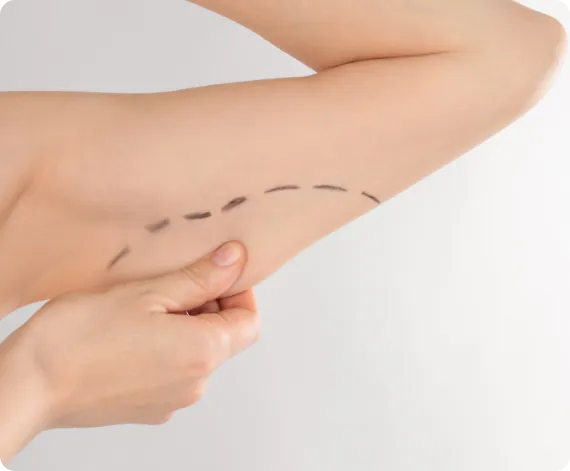
Loose skin and fat often accumulate in the upper area of the arms after significant and rapid weight loss or as a result of aging. This issue can trouble many people and cause them embarrassment to the extent that they may shy away from wearing short-sleeved shirts. Therefore, arm lift surgery has been designed, which may indeed be a solution to such problems.

Brief overview of arm lift surgery:
There are several types of arm lift procedures, and Dr. Mutaz Al-Shakhnbah will determine which type suits you best during your consultation visit.

The best candidates for arm lift surgery are patients who have excessive sagging skin in the upper arm with or without fatty tissue, making the upper arm appear disproportionate to the rest of the body.

Excess tissue and fat are removed through small surgical incisions in the back of the arm and near the elbow, to make it appear less saggy.

Then, the surgical incisions are sutured, and elastic bandages are applied, especially if arm lift surgery is combined with liposuction.

Before the procedure:
Before the procedure, the doctor performs several tests to ensure that the person’s health condition allows for this surgery. The doctor will also explain the areas from which the skin can be removed from the arms.

It is also necessary to consult the doctor about medications that should be stopped before surgery, with the necessity to quit smoking at least 3 weeks before the surgery, and fasting for 8 hours before the surgery.

After the procedure
It is normal to have some bleeding, which usually disappears within two weeks, in addition to gradually decreasing swelling. Usually, the dressings and drainage tube are removed the day after the surgery. The doctor recommends wearing a compression garment for two weeks after the surgery.

Where is the procedure performed?
In the hospital.

Duration of the procedure
Approximately two and a half hours.

Recovery time at home
One week.

Surgical incision and scar
The surgical incisions are made in the inner area of the arm, and often the scar remains red and thick for more than a year.

Hospital Discharge
The person can leave the hospital after several hours of the operation.

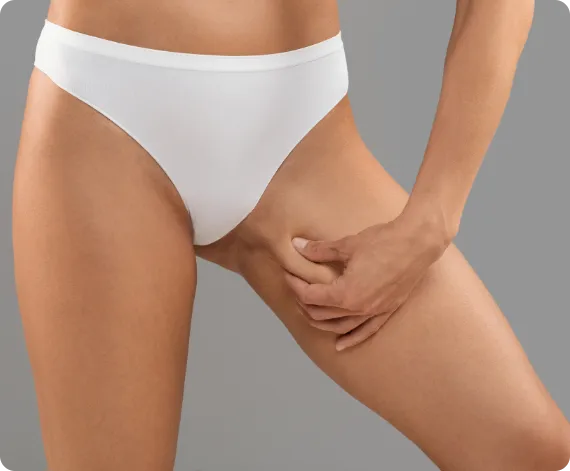
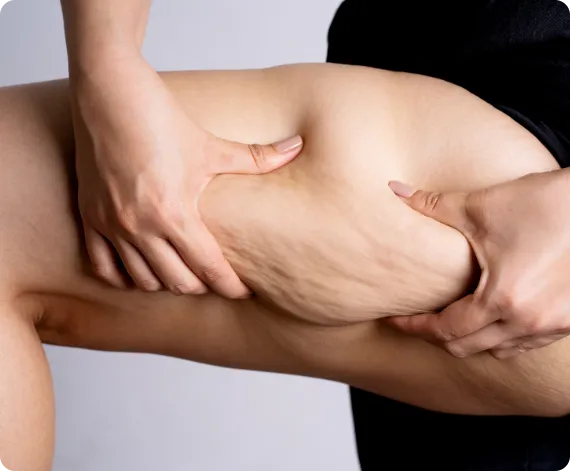
A fit body is every woman’s dream. Most women often suffer from flabby or asymmetrical areas of the body, especially the hips (thighs), as these areas tend to gain weight more quickly.

There are different types of this procedure, with the best one determined by the doctor after evaluating the case to meet the individual patient’s needs.
Inner Thigh Lift: This is the most common form of this cosmetic surgery, where the doctor removes excess sagging skin in the inner thigh area.
Mini Thigh Lift: This procedure requires only one incision in the thigh, unlike other types, and is considered a suitable option if the person wants to focus only on the upper inner part of the thigh.
Thigh Lift with Liposuction: This procedure is usually recommended if the person suffers from skin laxity in the thigh area.

In some cases, the thigh lift technique may be combined with buttock lift and recontouring of the gluteal fold, known as a spiral lift, which may be suitable for individuals with sagging in the buttocks and gluteal fold, and excess skin and fat in the inner thigh area.

The person typically needs several weeks to fully recover from a thigh lift procedure. The doctor will also recommend avoiding any strenuous exercises and lifting heavy objects for at least 6 weeks after the procedure.

It is normal to have some bruising after the surgery, which usually fades away within the first few weeks. The surgical incision may be noticeable immediately after the procedure but gradually fades over a year.

Duration of the Procedure
Approximately two to three and a half hours.

Where is the Procedure Performed?
In the hospital.

Recovery Time at Home
10 days.

Will there be a scar after the surgery?
Scarring is usually minimal and fades away within a month, and the doctor recommends wearing a compression garment for two weeks.

Hospital Stay
The person may need to stay in the hospital for one or two days.

If you have any questions, feel free to consult Dr. Moataz Al-Shakhanbeh.

Many women experience sagging or protrusion of the abdomen after childbirth, which can cause embarrassment or discomfort. However, there is no need to worry as it is now possible to undergo a cosmetic procedure to tighten the abdomen.

The Procedure Involves:
This procedure involves removing excess skin in the abdominal area and tightening the muscles. The doctor may also eliminate stretch marks and excess skin specifically below the navel, and there may be an option to treat a cesarean scar if present.

In some cases, liposuction and removal of excess skin in the abdominal area can be combined instead of undergoing a full tummy tuck operation. This may be beneficial in reducing the likelihood of noticeable scars and speeding up the recovery period, although the abdomen may not be well tightened.

To achieve excellent results, the doctor recommends maintaining a stable weight for at least 12 months before undergoing a tummy tuck. Additionally, quitting smoking is advised. The doctor will provide other instructions, including temporarily discontinuing certain medications to avoid potential complications.

Procedure
The surgery is typically performed under general anesthesia and involves the following steps:
A surgical incision is made along the bikini line.
Excess skin is tightened downward and then inward. The surgeon also removes any underlying fatty tissues.
Muscles and skin are tightened to cover the area, and the incision is closed in multiple layers using surgical sutures.
Often, a circular incision is made around the navel due to the amount of skin removed, without the need for navel removal.
Most women may experience discomfort for several days, but they often resume limited activities within a day. Plastic drainage tubes may be placed to prevent fluid accumulation.
Duration of Surgery: Approximately two and a half hours.

At-Home Recovery
Expect about two weeks of recovery at home.

Hospital Stay
Yes, you’ll need to stay in the hospital for one night.

Results
After the procedure, you’ll likely achieve satisfactory results, with a sculpted and more streamlined torso. Typically, the results of a tummy tuck are long-lasting, especially if you maintain a stable weight.

For more information about tummy tucks and body contouring, feel free to consult Dr. Mu’taz Al-Shakhanbeh

Overview of Buttock Augmentation:
The Buttock Augmentation procedure has gained significant popularity and demand in recent years due to its numerous advantages. This procedure is suitable for women who desire fuller buttocks with an attractive shape. The Brazilian Butt Lift, in particular, is the most common type of buttock lift.

However, not all women are suitable candidates for this procedure, especially those who are very lean and lack sufficient fat deposits.

The buttock Augmentation is performed under general anesthesia and usually takes approximately one to two hours.

Post-Procedure Considerations
After the surgery, you may experience some discomfort or pain. Bruising and swelling are common. Wearing compression garments can help reduce swelling.

Full recovery after the procedure may take up to six months. During this time, your doctor may recommend a protein-rich diet to aid in healing. Regular exercise focusing on the lower body, including butt-specific exercises like leg lifts and squats, can help maintain your new shape.

Where Is the Procedure Performed?
The surgery is typically performed in a hospital setting.

Home Recovery Time
Expect about one week of recovery at home.

Is There a Surgical Incision?
The surgeon makes small incisions on the buttocks, which usually result in minimal scarring after recovery.

Hospital Stay Required?
Yes, you’ll need to stay in the hospital for one night.

Brief Overview of Liposuction: Fat cells are distributed throughout the body, specifically beneath the skin. However, they tend to accumulate in larger quantities in certain areas, especially the abdomen, hips, thighs, arms, and neck.

Some individuals struggle with significant fat deposits in undesirable places, leading to an uneven body shape. To address this, liposuction was designed. It is suitable for people who desire a sculpted appearance and an ideal body. However, it’s essential to note that liposuction is a cosmetic procedure and does not impact overall weight (it is not a weight loss operation).

Liposuction can be performed on nearly any area of the body. Its effectiveness has been particularly proven for removing fat from body regions that do not respond well to diet and exercise, such as:

  • Abdomen
  • Love handles (flanks)
  • Chest and back
  • Buttocks
  • Thighs
  • Chin and neck

It can also be used for men to correct gynecomastia (enlarged male breasts) and reduce love handles around the waist.

Types of Liposuction
There are several types of liposuction, including:

  1. Tumescent Liposuction (Injection Lipolysis): This is the most common method. It involves injecting several liters of sterile solution (saline) under the skin in the targeted fat removal area. Typically, this solution contains a mixture of local anesthetic and epinephrine (which constricts blood vessels). This surgical procedure facilitates easy fat removal and minimizes blood loss.
  2. Ultrasound-Assisted Liposuction (UAL): During this procedure, ultrasound energy is directed beneath the skin to break down fat cell walls, making the fat more liquid and easier to suction. UAL is suitable for areas like the male chest, back, and previously liposuctioned regions.
  3. Vaser Liposuction (Vibration Amplification of Sound Energy at Resonance): A type of ultrasound-assisted liposuction that effectively breaks down fat cells from deeper tissues.
  4. Power-assisted liposuction: It involves inserting a thin tube that emits energy and vibrations; these work to break down fat cells to facilitate their removal. This procedure is considered safe and fast, requiring faster recovery time, as it does not affect surrounding tissues, and can be used to remove any fat in most areas of the body.

Where Is the Procedure Performed?
The location depends on the amount of fat the person wants to remove. If it’s a small amount, the surgery can be performed in an outpatient clinic. However, for larger fat volumes or if you’re undergoing multiple areas of liposuction, it may be done in a hospital or surgical center.

Remember that liposuction is a cosmetic procedure, and consultation with a qualified plastic surgeon is crucial to determine the best approach for your specific needs.

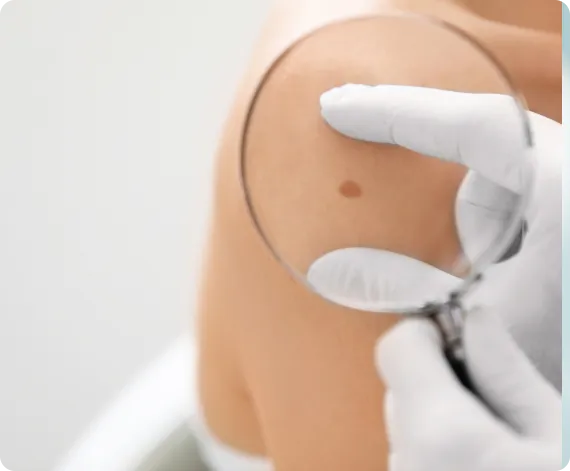
Skin cancer, or melanoma, occurs due to abnormal and uncontrolled growth of skin cells, often in sun-exposed areas of the body. However, this type of cancer can also affect areas of the skin that are not typically exposed to the sun.

This type of cancer is usually treatable, as in some cases, the cancer can be surgically removed from the skin using modern techniques and specialized procedures to preserve the patient’s health and improve the overall appearance of their skin.

Methods of Skin Cancer Removal
There are several surgical procedures for removing skin cancer, such as:

Surgical excision: The doctor removes the cancer and a portion of the surrounding healthy skin.
Cryotherapy: Small cancers are frozen using liquid nitrogen, causing the dead tissue to eventually slough off.
Mohs surgery: This involves precise removal of cancerous cell layers without damaging healthy tissue.
Curettage and electrodesiccation: The tumor is scraped off using a special tool, and then the edges are burned to eliminate any remaining cancer cells.

Post-Skin Cancer Removal
The next step after removing the cancer is skin reconstruction to prevent scarring or unwanted effects in the area where the skin cancer was removed. Dr. Mutaz Alshakhanbah performs a cosmetic procedure involving skin grafting.

Usually, this cosmetic procedure is performed during the surgical removal of the cancerous growth. It involves taking a patch or flap from another area of the body (often the inner thigh, arms, or buttocks) and transplanting it into the area where the growth was removed.

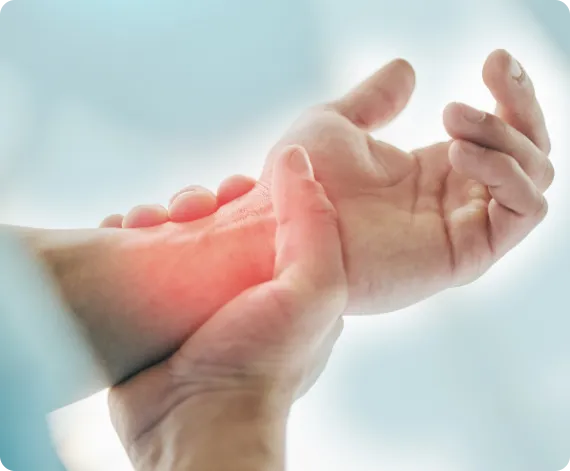
Some individuals may suffer severe hand injuries due to accidents, be born with congenital deformities, or have tumors that require removal. These problems can be treated through hand reconstruction surgery, which aims to restore the shape of the fingers and wrist, as well as improve their strength, function, and flexibility.

Hand reconstruction surgery can be either emergency or elective, depending on the severity of the condition. The doctor evaluates the case and determines the appropriate treatment plan.

Hand reconstruction surgery requires treatment by a specialized hand surgeon, as it is a delicate procedure, which is precisely what Dr. Mutaz Alshakhabah does. He has performed many successful hand reconstruction surgeries.

Before the surgery:
you will have the opportunity to discuss the goals of the operation, whether they are therapeutic or cosmetic. The doctor will evaluate your condition to determine if you are a good candidate for the surgery and explain all the appropriate procedures for your health.

The doctor will also provide pre-operative instructions to ensure its success, such as quitting smoking and temporarily discontinuing some medications.

You can expect the best results for hand reconstruction cases as the latest techniques are used at Dr. Mutaz Alshakhanba clinic, including 3D imaging and reconstruction techniques.

Do not hesitate to visit Dr. Mutaz Alshakhanba clinic to learn more about the procedure.

Gynecomastia, or enlarged breasts in males, is a common problem that can affect one or both breasts. It occurs due to excessive growth of breast tissue or fat, so that it becomes similar to a female breast, which may cause great embarrassment. The cause of this condition is often unknown to most affected men, but it is generally associated with certain medications or certain health problems, leading to a hormonal imbalance in estrogen and testosterone.

Liposculpture may be suitable for men who wish to reduce the size of their breasts. Through this procedure, fat and/or glandular tissue are removed from the breasts, with or without excess skin removal in some cases, resulting in a flat, tight, and proportionate chest for the man’s body.

In some cases, liposuction alone may be sufficient to correct this issue, where there is only fat accumulation causing breast enlargement, a condition referred to as pseudo-gynecomastia.

There are two options for male breast reduction surgery:

  1. Liposuction: which is performed if fat is the cause of the breast enlargement and not the breast gland tissues themselves.
  2. Excision of breast gland tissues: which involves making small incisions in the breasts. This approach helps reduce recovery time.

Sometimes, a combination of liposuction and excision of gland tissues may be performed.

Where Is This Procedure Performed?
In a hospital.

Time Needed for Recovery at Home
A week.

Where Are the Surgical Incisions Made?
Hidden under the armpit.

Time Required for the Procedure
Approximately half an hour to an hour.